INTRODUCTION
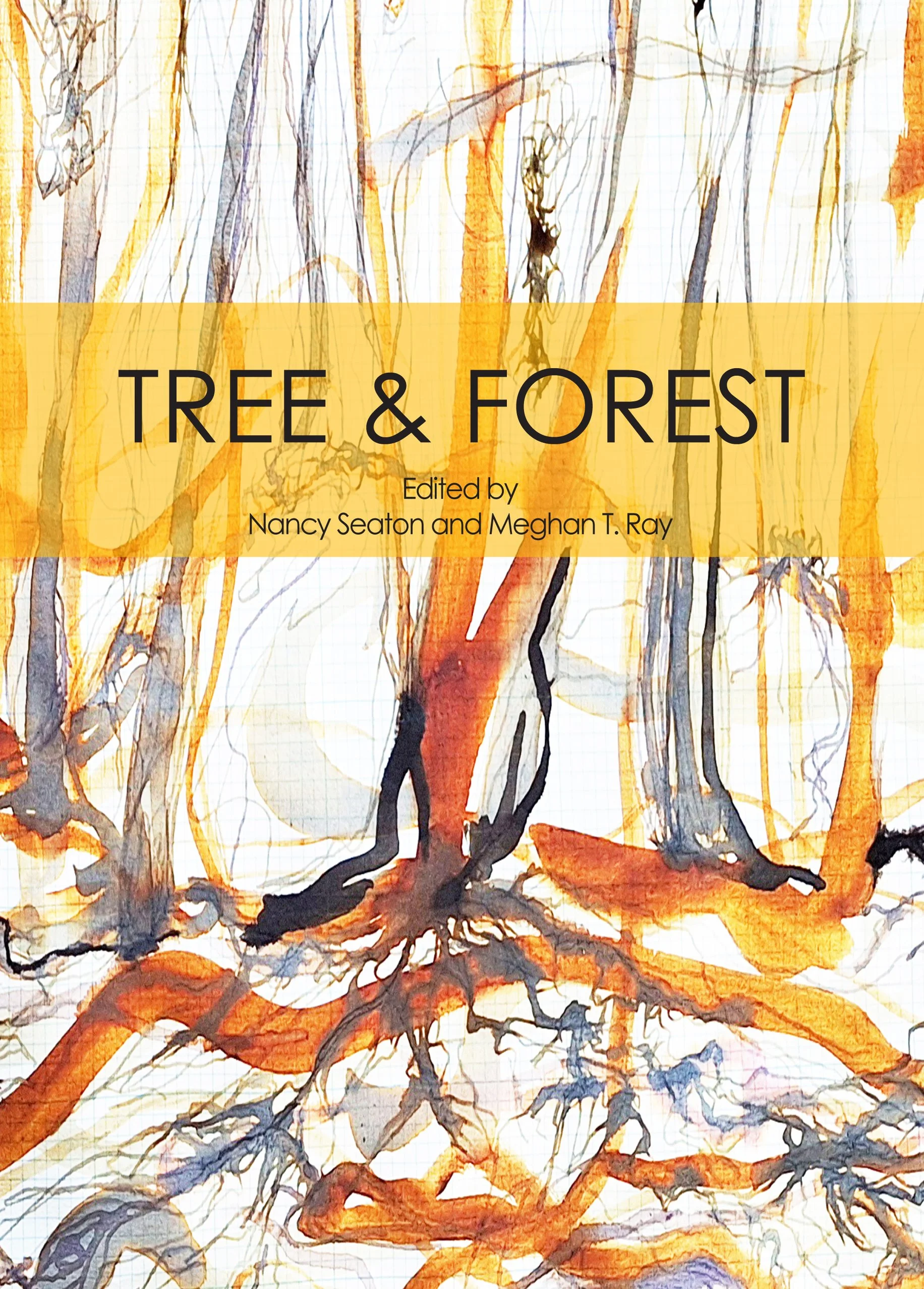
Forests seldom fail to evoke strong feelings. Their imagery threads its way through literary and visual media across cultures and times. They may be places harboring great evil or good, may be symbols of strength and endurance or they may be fragile and rare. For me, those feelings have always been equally divided between positive associations of exploration and freedom, of wonder and appreciation at the ‘natural world’ and negative ones of fear—of dangers both known and unknown.
My childhood was filled with fairytale forests. In my books, they were places of extreme danger where the unwary would encounter witches, wild animals, cold, and hunger- but also opportunities (for the brave and good) to find magical gifts of power and riches. In my childish way, I absorbed those lessons, taking the forest as both a metaphor for life but also a real presence in my imagination.
As I grew older those feelings were sublimated to my lived experiences camping and hiking in wooded places. As a child, my family camped in the forests of Wisconsin and the upper Midwest-national forests with campgrounds and lakes, pit toilets and cleared trails. Here you could find the gift of independence from the adult eye instead of magical, fairytale opportunities. There was the quiet beauty of sunlight through the trees, the gentle sounds of the woods that were in such contrast to my city childhood. But we also faced the dangers of our poor woodcraft (poison ivy, getting lost, cuts, bruises, dislocated joints). As an adult, I hike and camp recreationally, carrying heavy packs, water purifiers, sleeping pads, walking miles to try to find human-less places to spread out and ‘get away.’ This new life experience retainS both measures of fear and freedom- the fear of witches is now replaced by my imaginary ‘radio killer’ who stalks campers while holding a transistor radio (the result of an auditory hallucination created by the sound of rushing water transformed into radio announcer babble) and freedom is from the all-seeing eye of the modern world, that release of tension when you truly can no longer hear the sound of the highway and you find that you have no cell phone signal. But know my childish forest still lives along side my adult experience, keeping me in terror and in hope of its magic power, a power greater than my mundane modern mind allows it. This issue of Prospect, exploring forests in their myriad real and imagined guises, the ways humans impact their management, understand and appreciate their role on the planet (and also in our story of ourselves), offers an opportunity to step back and look at what forests ‘mean’ through the lens of science, technology, economics, and cultural imagination.
—MEGHAN T. RAY
COLLABORATORS:
Victoria Bevington, Magali Duzant, Ethan Fenner, Nikki Lindt, Morgan Mangelsen, Greg Owens, Peggy Ray, Meghan T. Ray, Nancy Seaton, Robert Sullivan, and Eri Yamagata.
MEMBERSHIP
JOIN US! Contact us for details.
A collective of designers who meet monthly.
Members are encouraged to challenge conventional modes of representation through the use of physical models while exploring the temporal qualities of landscape.
Short selection of dioramas by members: Eri Yamagata, Ana Coccioletti, Cecil Howell, Lisa DuRussel, Laura Harmon, Diana Gruberg, Olivia Kaufman, Khyati Saraf & Nancy Seaton.
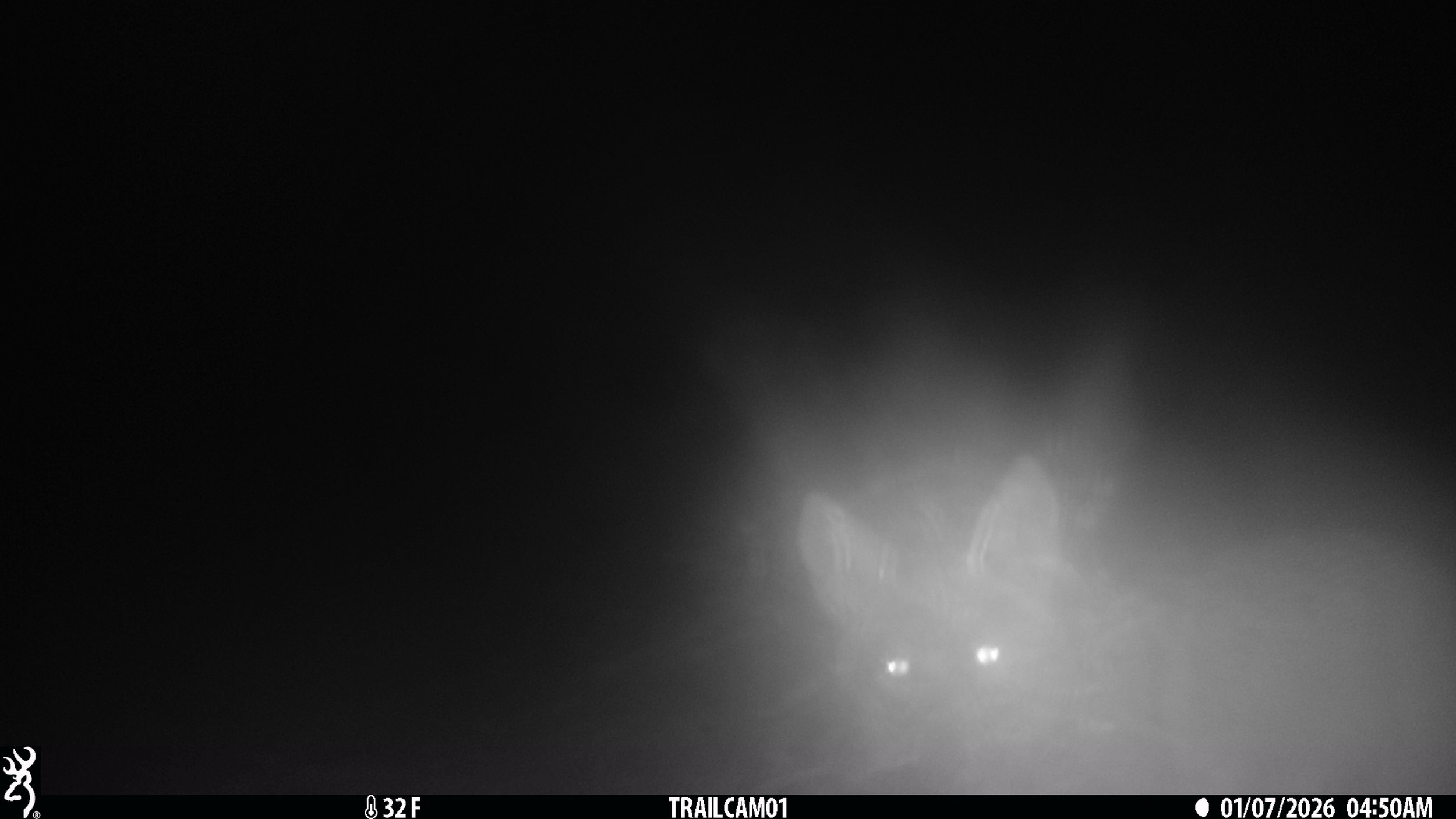
A motion-activated wildlife camera trained on a beaver dam, 20 minutes from an urban center.
A thin crust of soil and vegetation clad the earth’s bedrock. Rarely seen in New York City, except in the a few dramatic outcrops that remain, stone lies beneath everything. In other places, the magnitude of the mineral world is revealed where roads have been carved through hillsides, in cliffs such as the Palisades and in the sublime mountainous landscapes of the West, the Alps, and the Himalayas. Stone appears to be stable, inert, but is in a constant state of metamorphosis. These changes occur on multiple time scales: incomprehensibly vast periods that extend to billions of years, cataclysmic events that interrupt and disturb longer cycles, and daily geomorphic weathering. Bedrock is folded, lifted up, penetrated by jets of magma, and is pushed under to become molten, undifferentiated mineral stew. Rock is eroding, shedding layers, oxidizing, reacting to various exposures and proximities, often breaking into smaller pieces.
Individual stones have been prized for their color, shape and crystalline structure; rough, dull exteriors can belie gemiferous interior troves. Some rocks are renown for their musical resonance, such as the Lingbi scholars’ rocks; others have been mined and mapped for economic resource extraction. The mineral component of our landscapes determines what will grow, effecting pH and nutrient availability, how light is reflected and absorbed, and more obviously determines the natural topography upon which we trod.
As with our previous issues, the topic has inspired a range of interpretations. Stonewalls, cabinets of precious gems, stones that are more animal than mineral (bezoars) or stones that are carved to appear more stony (French rocaille work), maps of mineral deposits, pictures, odes and exposition on the history of situating rock strata are some of the topics discussed and realized for OUTCROP.
COLLABORATORS:
Nancy Seaton, Marie Warsh, Hsieh Ling Yun, Kate Papacosma, Chris Patch, Meghan T.Ray, David Howell, Charlie Howe, Jill Desimini, DJ Savarese, Diana Gruberg, Greg Owens, Hans Baumann, Clark Coolidge, Dave Tomkins, Alyssa Gorelick, Wayne Morris, Margaret Gisia Mosiej, Bernadette Mayer, Sophia Warsh, Laura Harmon, Jeffrey Schiff
Sacred and Profane:
I walked the rows of NYC's necropolis, Calvary I, the air perfumed with saccharine vanilla - possibly from the neighboring Wonton Food Inc., on Bradley Avenue. There was a faint undertone of diesel fuel from any number of sources - including the entrance ramp to the LIE and the automotive repair shops that line this section of Greenpoint Avenue. Angel-topped monuments and shrouded columns foreground an iconic view of Manhattan's skyline to the west. Turn around and you are confronted with the flow of traffic over the BQE's Kosciusko Bridge, the silver digesters of the Newtown Creek Wastewater Treatment Plant, and the refineries that have slowly leaked oil into the neighborhood for decades. These adjacencies exude a rough vitality and a matter-of-fact disregard of the buried and the handful that mourn. Cemeteries and the unsightly infrastructures that serve the city's inhabitants collide in uncomfortable, ironic and inappropriate ways along the once forsaken edges of the outer boroughs. Yet the inscriptions, such as Adeline, Leonard, Celia, Beloved Son, papa, and sister transcend the often-banal periphery, fostering intimacy with these former, fellow New Yorkers.
NECROPOLIS
As many of us move deeper into the outer boroughs, we are confronted with cemeteries, landscapes originally characterized in part by their geographical remoteness, built on hills overlooking a distant city that has been gradually encroaching ever since. For some of us (the editors) these spaces have become our local parks. The interactions between a cemetery and the city, as described above, has inspired this third issue of Prospect.
The word “necropolis,” is typically used to describe larger and often ancient cemeteries, defined as a city of the dead. This NECROPOLIS explores the cemetery, focusing on its meaning and experience as a landscape. Projects search to understand how cemeteries or burial grounds inform our relationships to history and place and ways that they present such an enormity and mystery as death. While it’s clear that the need for places to bury and honor the dead has shaped the landscape for centuries, even millennia, it is less clear how these landscapes have shaped us.
COLLABORATORS:
Marie Warsh, Nancy Seaton, Wayne Morris, Brendan Lorber, Seldon Yuan, Brenda Coultas, Zenobia Meckley, Ethan Fischer, Anni Peller, Tam Ochiai, Steven Bopp, Ginny Cook, Meghan T. Ray, Max Hooper Schneider, Greg Owens, Marco Wilkinson
For many of us, personal boundaries have become a daily obsession. Hyper-aware of proximity and the distance at which human breath commingles, “You are standing too close to me” might be thought or spoken even as we dwell on the sustained physical absence of friends and co-workers over the initial years of a pandemic that may well be continued into an uncertain future. How much space around an individual contains their radiant heat, germs, and pheromones—is this zone an extension of the body?
Boundaries can be physical divisions: walls, membranes, rivers, masks. They may also be manifest as cultural expectation, as lines on a map or as classifications between matter. Marking a separation on paper does not eliminate the complexity of relationships that cross between but speaks directly to sovereignty and those with the authority to define the line. Conceptualized as such, these artificial delineations control people and places through a variety of means, often violent and often non-consensual. They are not durable and they are rendered mutable over time: erected, transgressed and eroded by people, context, revolution and pandemic. And yet, boundaries exist in opposition to entropy.
Prospect, Issue #7 is a call to examine boundaries—to share experiences, political awakenings, and potent reappraisals of relationships between people, other species, and the environment. The diverse projects in this collection illustrate the breadth of this boundless topic—explorations into the corporeal and abstract expressions of boundaries. The editors hope that Prospect elicits further consideration and conversations.
COLLABORATORS:
Daniel Atha, Matthew Alvarez, Hans Baumann, Sarah Nicholls, Lois Farningham, Joel Freeman, Cecil Howell, Daniela Leija Quintanar, Meghan T. Ray, Khyati Saraf, Nancy Seaton, and Eri Yamagata.
Wastelands are anthropogenic landscapes in construction and conception; they are the sites upon which we project our disgust and perceptions of worthlessness, the places where we inter our excrement, and, generally, spaces we avoid.
This issue of Prospect finds our contributors in the field, sifting through the debris of past centuries, and removing contemporary garbage from otherwise pristine shores. Projects within this issue illustrate the subjective judgements we project onto landscapes with terms such as beautiful. They reveal moral lessons found in historical husbandry, introduce you to a bucolic utopia gone sour, and showcase the designed no-places encountered across a transect of rural to urban environments. As always, our collaborators have responded with projects that push and expand our conceptions of what wastelands might be, harnessing the pervasive anxiety about the climate crisis that engulfs us, turning it into a touchstone of cultural production and positive action.
COLLABORATORS:
Cecil Howell, Thomas Rinaldi, Marie Lorenz, Diana Gruberg, Jill Desimini, Je Sung Lee, Donna Dennis, James Walsh, Greg Owens, Vinzenz Adldinger, Wayne Morris, Matthew Alvarez, Katarina Jerinic, and Nancy Seaton.
WILDERNESS (from the OED):
Old English wildēornes 'land inhabited only by wild animals', from wild dēor 'wild deer' + ness
1. a. (without article) Wild or uncultivated land.
1. b. (with article or other defining word) A wild or uncultivated region or tract of land, uninhabited, or inhabited only by wild animals; ‘a tract of solitude and savageness’ (Johnson).
1. c. A piece of ground in a large garden or park, planted with trees, and laid out in an ornamental or fantastic style, often in the form of a maze or labyrinth.
2. A waste or desolate region of any kind, e.g. of open sea, of air.
3. fig. a. Something figured as a region of a wild or desolate character, or in which one wanders or loses one's way; in religious use applied to the present world or life as contrasted with heaven or the future life
3. b. Rhetorically applied to a place (e.g. a building or town) which one finds ‘desolate’, or in which one is lonely or ‘lost’.
3. c. in the wilderness (in allusion to Numbers xiv. 33), (a) of a politician, political party, etc.: out of office; (b) gen. unrecognized, out of favour.
4. A mingled, confused, or vast assemblage or collection of persons or things. (Usually coloured by other senses; in reference to a growth of plants, nearly coinciding with 1b; in reference to buildings, etc., often approaching 3b.)
5. a. Wildness, uncultivated condition. Obs.
5. b. fig. Wildness of character, licentiousness. Obs. nonce-use.
As we were reminded by a friend the other day, the word wilderness has become almost valueless in its plurality of meanings and contemporary usage, much like the word nature or 'scape. That said, we still believe that wilderness can invoke particular places, stories, visions and ideas. Perhaps.
COLLABORATORS:
Marie Warsh, Nancy Seaton, Johanna Bauman, John Moore, Beverly Bailis, Meghan T. Ray, Erik de Jong, Ray Daniels, Hilary Angelo, Marcel Parrilla, Harry Birckmayer, Anni Peller, Peter DelTredici, Jill Desimini, Hans Baumann, Jiayu Qin, Wayne Morris, Sophia Warsh, Emily Schroeder, David Buckley Bordern, Celine Lombardi, Uli Lorimer, Charlie Howe, Bernadette Mayer, Philip Good, Greg Owens, Terri Harrison, Libby Barnes, Marco Wilkinson
The word oasis conjures visions of palm trees; pure, refreshing springs; olives and dates; the heady fragrance of citrus and jasmine - scent memories of beautiful times and places; camels; and the colorful tents of nomadic tribes. Perhaps this list is based on romantic notions of distant topoi, such as the Silk Road, imagined by this Northern-dweller. Your list of associations will be different than mine, I am sure.
Oasis evokes a peripheral lexicon of words that shelter one from difficult circumstances, if only as metaphor, such as island, sanctuary, paradise, refugia, and utopia. Mirage, a related term, is not necessarily an hallucination (as the optical effects are real), but is no more useful than a dream or a vision, without the tangible benefits of an oasis.
Technically, oasis is defined as a fertile spot in an otherwise barren region. The isolated area of vegetation is fostered by the presence of a natural occurrence of water in an arid zone, either from a rare surfacing of a subterranean water source or from a geology that has the ability to retain moisture, unlike the surrounding sands.
An oasis can be real or illusory, a place that provides all that is fundamental for survival, nourishing both the physical and the spiritual. The mere utterance of the word sounds like a sigh of relief or ecstasy—OASIS—coupling an exclamation (O) with an exhalation (ahs).
COLLABORATORS:
Nancy Seaton, Miranda Pierce, Clare Al-Witri, Khyati Saraf, Anne Eastman, Amanda Friedman, Marie Warsh, KB Jones, Eri Yamagata, Meghan T. Ray, Melissa Gorman, Sophia Warsh, Ana Coccioletti, Lisa DuRussel, Diana Gruberg, Laura Harmon, Wayne Morris, Matilde Nardelli & Bernadette Mayer
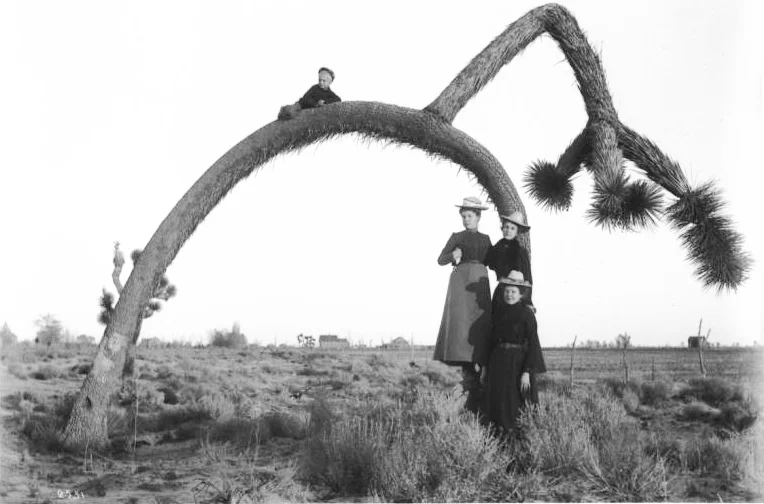
Trove of desert images found in the USC Digital LIbrary in the California Historical Society Collection, 1860-1960.
Joshua trees (Yucca brevifolia), iconic and charismatic plants of California, are frequently the subject of desert photography. In this small selection, the yucca share the spotlight with humans.
images and books depicting or related to oases.
"To build, to plant, whatever you intend,
To rear the column, or the arch to bend,
To swell the terrace, or to sink the grot;
In all, let Nature never be forgot.
But treat the goddess like a modest fair,
Nor overdress, nor leave her wholly bare;
Let not each beauty ev'rywhere be spied,
Where half the skill is decently to hide.
He gains all points, who pleasingly confounds,
Surprises, varies, and conceals the bounds.
Consult the genius of the place in all;
That tells the waters or to rise, or fall;
Or helps th' ambitious hill the heav'ns to scale,
Or scoops in circling theatres the vale;
Calls in the country, catches opening glades,
Joins willing woods, and varies shades from shades,
Now breaks, or now directs, th' intending lines;
Paints as you plant, and, as you work, designs."
- Alexander Pope, "An Epistle to the Right Honourable Richard, Earl of Burlington" 1731
Alexander Pope’s invocation to “consult the genius of the place” still informs our thinking about the relationship between design and landscape. The second issue of Prospect, entitled “Sited,” explores what it means to be site-specific, and how we engage with a site through its history, temporal and sensual qualities, and catalog of biological and physical components.
COLLABORATORS:
Rosemary Mayer, Marie Warsh, Hans Baumann, Charlie Howe, Nancy Seaton, Marie Lorenz, Anne O'Neill, Ruth Rae, Zac Ward, Laura Harmon, Daniela de Sola, Meghan T. Ray, Kate Papacosma, Wayne Morris, Max Warsh
OCTOBER 15, 2016
A celebration of the infamous waters of the Gowanus. Participants joined our fleet, drifting on high tide under a full moon on October 15th! Choreographed to synchronize with Gowanus Open Studios. Allegiance to art was shown by taking to the water, commemorating the historic dredging, cleaning and capping of the Canal!
In collaboration with: Gowanus Canal Conservancy, Arts Gowanus, The Gowanus Dredgers Canoe Club, Cecil Howell, Nancy Seaton & Peter Reich.